
Our trainer was on Ninja Warrior
WELCOME TO OUR SITE
NDIS Personal Trainer. Health and Fitness Coach.
- Improve strength and inderpendance for daily tasks
- With the 10 Week NDIS Reset package
- Includes personal training, nutrition guidance, and support message
10
Years of experience
95
Active Clients
189
Google Reviews





Locations & Services
Mobile Training
Melbourne
Sydney
Brisbane
Adelaide
10 Years Experience
All Conditons Welcome
We specialize in only training disability clients. Every client and all conditions are very welcome.
Build Strength
Our friendly trainers focus on enjoyable workouts that build strength.
Be Independent
Become independent and feel confident for daily tasks.
Give Me 6 Weeks and I’ll Help You…
Build confidence in yourself
Improve your strength
Increase your mobility
Boost your mental health
Reduce pain and stiffness
NDIS Personal Trainer Cost
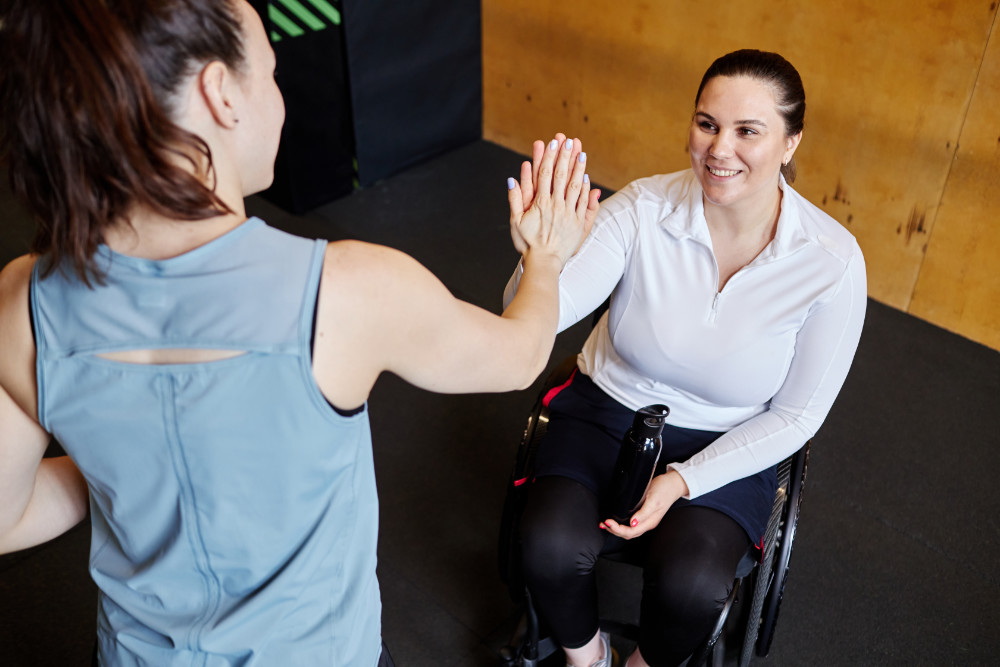
Training sessions are $100. And the 10 Week Reset Package is 1,999 paid weekly. We help you use your funding for personal training. It’s classified as active support working, and you can use the following categories:
- Core – Daily Activities
- Capacity Building – Improved Health and Wellbeing
- Capacity Building – Improved Daily Living
How it Works
We make it easy for the participant and support coordinator.
Get in Touch
Call, email, or text us is the first step. We’ll ask you questions and give you more info.
Get Funding
We can talk to the participant or support coordinator about your funding options.
Get Fitter and Healthier
Start seeing and feeling positive changes in your life with our specialized training services.
Frequently asked questions
1. What if I have complex needs?
You can still work with a personal trainer, and you might get better results than people without complex needs.
Complex needs include things like chronic pain, old injuries, disabilities, mental health conditions, or medical issues that make exercise harder. Many trainers work with people who have these challenges every day.
Good trainers know how to change exercises to fit your body. If you can’t do a normal squat because of knee pain, they’ll find a different exercise that works the same muscles without hurting you. If you get tired fast, they’ll build your fitness slowly instead of pushing too hard.
Research shows people with disabilities who work with qualified trainers see real improvements in strength, balance, and daily function. A 2018 study found that people with chronic conditions who did supervised exercise programs had 40% better results than people who tried exercising alone.
Here’s what matters when you have complex needs:
1. Find a trainer who asks about your medical history before you start
2. Look for someone who has worked with people like you before
3. Make sure they talk to your doctor or physiotherapist if needed
4. Check they can change exercises when something doesn’t work for your body
5. Pick someone who listens when you say something hurts or feels wrong
The NDIS recognises that people with complex needs often need professional help to exercise safely. That’s why they can fund personal training in many cases.
Your trainer should treat you like a real person, not a problem to fix. They should celebrate small wins, like when you can lift the shopping bags easier or walk further without getting tired.
2. Is it worth paying for a personal trainer?
Yes, personal trainers help you get results faster and avoid injuries that cost more money later.
Think about the money you spend on a trainer as buying knowledge and safety, not just exercise time. When you work alone, you might waste months doing exercises wrong or picking workouts that don’t match your goals.
Studies show people who work with trainers lose weight two times faster than people who exercise alone. A 2019 research paper found that people with trainers stuck to their exercise plans 85% of the time, while people without trainers only stuck to their plans 40% of the time.
Here’s what you get when you pay for a trainer:
- Someone who stops you from hurting yourself with bad form
- A plan that actually matches your goals instead of random exercises
- Someone who pushes you harder than you’d push yourself
- Knowledge about which exercises work best for your body
- Accountability so you actually show up instead of making excuses
The average person who tries to lose weight alone quits after six weeks. People with trainers keep going for an average of six months. That’s eight times longer.
Injuries from bad exercise form cost Australians millions in physiotherapy and medical bills each year. One session with a physiotherapist costs $80 to $150, and you might need ten sessions to fix an injury. Compare that to learning correct form from the start with a trainer.
Personal trainers also save you time. Instead of spending hours watching YouTube videos and trying to figure out what works, your trainer gives you a clear plan on day one. You get results in months instead of years.
3. Can the national disability scheme pay for a personal trainer?
Yes, they can pay for personal training if it helps you reach your goals and you have the right plan.
They fund supports that are reasonable and necessary for people with permanent disabilities. Personal training counts as a reasonable support when it helps you build strength, improve your health, or do daily activities better.
Your plan needs to include funding for either Improved Health and Wellbeing or Improved Daily Living. Personal training usually comes from these budget categories. Some people also use their Core Supports budget if their plan manager agrees.
They will likely fund personal training when:
- Your doctor or allied health professional recommends it
- You need help exercising safely because of your disability
- The training helps you reach goals written in your plan
- You can’t exercise safely without professional help
- The training builds skills you need for daily life
They look at whether personal training is the right support for you compared to other options. If you could get the same results from a group exercise class that costs less, they might suggest that instead. But if you need one on one help because of your specific disability, they’ll fund it.
Your trainer needs to write reports showing how the training helps you. These reports prove the money gets spent properly and helps you when your plan gets reviewed.
Many participants use personal training successfully. The key is making sure your plan includes the right budget categories and your trainer understands your requirements.
4. Does the National Disability Scheme fund gym memberships?
They not usually fund regular gym memberships, but they can fund exercise programs at gyms.
The difference matters. A gym membership just gives you access to equipment. An exercise program includes professional support, a plan made for your disability, and someone checking your progress.
Funding focuses on supports that directly help your disability. Walking into a gym and using equipment alone doesn’t count as a disability support. But working with a trainer at that gym who helps you exercise safely does count.
They might fund gym-based supports when:
- A qualified trainer works with you one on one or in small groups
- The program gets designed specifically for your disability needs
- Someone tracks your progress and writes reports
- The gym program helps you reach goals in your NDIS plan
- You need professional support to exercise safely
Some gyms run registered programs. These programs cost more than normal memberships because they include professional support and reporting. The gym needs to be a registered provider to claim funding.
Your plan manager or support coordinator can help you find gyms that offer funded programs. These programs look different from normal gym memberships because they include regular assessments, modified exercises, and professional supervision.
The NDIS wants to fund supports that make a real difference to your life. A gym membership alone doesn’t guarantee results, but a supervised exercise program with a qualified trainer does.
5. How much is a 1 hour PT session?
Personal training sessions in Australia cost between $60 and $150 per hour, with most trainers charging $80 to $100.
The price changes based on where you live, how experienced your trainer is, and whether you train at a gym or somewhere else. Trainers in big cities charge more than trainers in smaller towns. Trainers with special qualifications or many years of experience also charge higher rates.
Here’s what affects the price:
- Location – Sydney and Melbourne trainers charge $90 to $150, regional areas charge $60 to $90
- Experience – new trainers charge less, trainers with 10+ years charge more
- Qualifications – trainers with university degrees or special certifications charge more
- Where you train – training at your home costs more than training at a gym
- Package deals – buying 10 sessions at once usually saves you 10% to 20%.
Personal training sessions in Australia cost between $60 and $150 per hour, with most trainers charging $80 to $100.
The price changes based on where you live, how experienced your trainer is, and whether you train at a gym or somewhere else. Trainers in big cities charge more than trainers in smaller towns. Trainers with special qualifications or many years of experience also charge higher rates.
Here’s what affects the price:
- Location – Sydney and Melbourne trainers charge $90 to $150, regional areas charge $60 to $90
- Experience – new trainers charge less, trainers with 10+ years charge more
- Qualifications – trainers with university degrees or special certifications charge more
- Where you train – training at your home costs more than training at a gym
- Package deals – buying 10 sessions at once usually saves you 10% to 20%
Mobile trainers who come to your house charge $100 to $150 because they spend time traveling. Trainers at commercial gyms charge $70 to $100 because the gym takes a cut of their fee. Independent trainers at smaller studios charge $80 to $120.
For NDIS participants, personal training costs get covered by your plan funding. NDIS has set price limits for different types of supports. Exercise physiology and personal training fall under similar categories, with rates around $60 to $80 per hour depending on your location and the provider’s registration level.
Some trainers offer semi-private sessions where you train with one or two other people. These sessions cost $40 to $60 per person and still give you professional guidance while saving money.
Budget gyms sometimes offer personal training for $50 to $70 per hour, but the trainers might have less experience or qualifications. Premium gyms and specialized studios charge $120 to $150 per hour but often have trainers with advanced qualifications.
When you compare prices, look at what you get for your money. A cheaper trainer who doesn’t know how to work with your specific needs might waste your time and money. A more expensive trainer who gets you results faster actually costs less in the long run.
Most trainers offer free first sessions where you can meet them and see if you work well together. Use these sessions to ask about their experience, qualifications, and whether they’ve worked with people who have similar needs to yours.
Start with a free session
It’s hard to know if our service if right for you without trying. Our trainers give it their all. They’re friendly and experienced.




95 +
NDIS clients
NDIS Personal Trainer Reviews
Sally
Nathan
Tiera
Josh
Sarah
Felicity