NDIS Personal Trainer Melbourne: Adapted Support
One-to-one adapted training for NDIS participants across Melbourne, with in-home, park and gym-based sessions built around your plan and your goals.
Check NDIS personal trainer availability in your suburb
Enter your Melbourne suburb or postcode first. If coverage is available, send your details and we will come back with the best next step.
NDIS personal training in Melbourne
A practical guide for participants, families and support coordinators comparing adapted personal training options across Melbourne.
Personal training adapted for NDIS participants in Melbourne
If you're looking for an ndis personal trainer melbourne participants trust, one-to-one adapted training builds every session around your goals. Managing a physical disability, a neurological condition or a mental health diagnosis? Your ndis plan can fund personal training that meets you where you are. Sessions are tailored to your ndis funding category, your goals and your environment.
One-to-one training: convenience, accessibility, individualised support
Every session is built around convenience, accessibility, individualised support. Your personal trainer sets a clear goal with you first: walking to the letterbox unassisted, getting through a shift without fatigue, whatever matters most. Then the session gets built around it.
Who we support
Support suits any ndis participant wanting to move better and feel stronger, regardless of disability type or condition. This includes clients with intellectual disability, autism, spinal cord injury, cerebral palsy and psychosocial disability. As an ndis service provider based in melbourne, sessions are delivered by ndis registered personal trainers in melbourne who work alongside your existing disability support team.
- Plan-managed and self-managed participants
- Clients referred by support coordinators or allied health teams
- People training for the first time and returning clients rebuilding after a setback
Benefits of NDIS personal training in Melbourne
The real benefits of ndis personal training in melbourne show up in daily life, not on a scale. One client started sessions unable to get off the floor without help. Four months of twice-weekly training later, she could stand from the floor unaided and walk around her block without stopping to rest.
Building strength, mobility and independence
Training targets strength, mobility and independence through functional movement: sit-to-stand, step-ups, carrying groceries. This physical work translates directly into fewer support hours needed for everyday tasks.
Supporting mental health and well-being
Regular sessions support mental health and well-being too, giving the week structure and something steady to build confidence around. In our experience, clients notice improved sleep and mood alongside physical gains, supporting overall health and a better quality life outcome.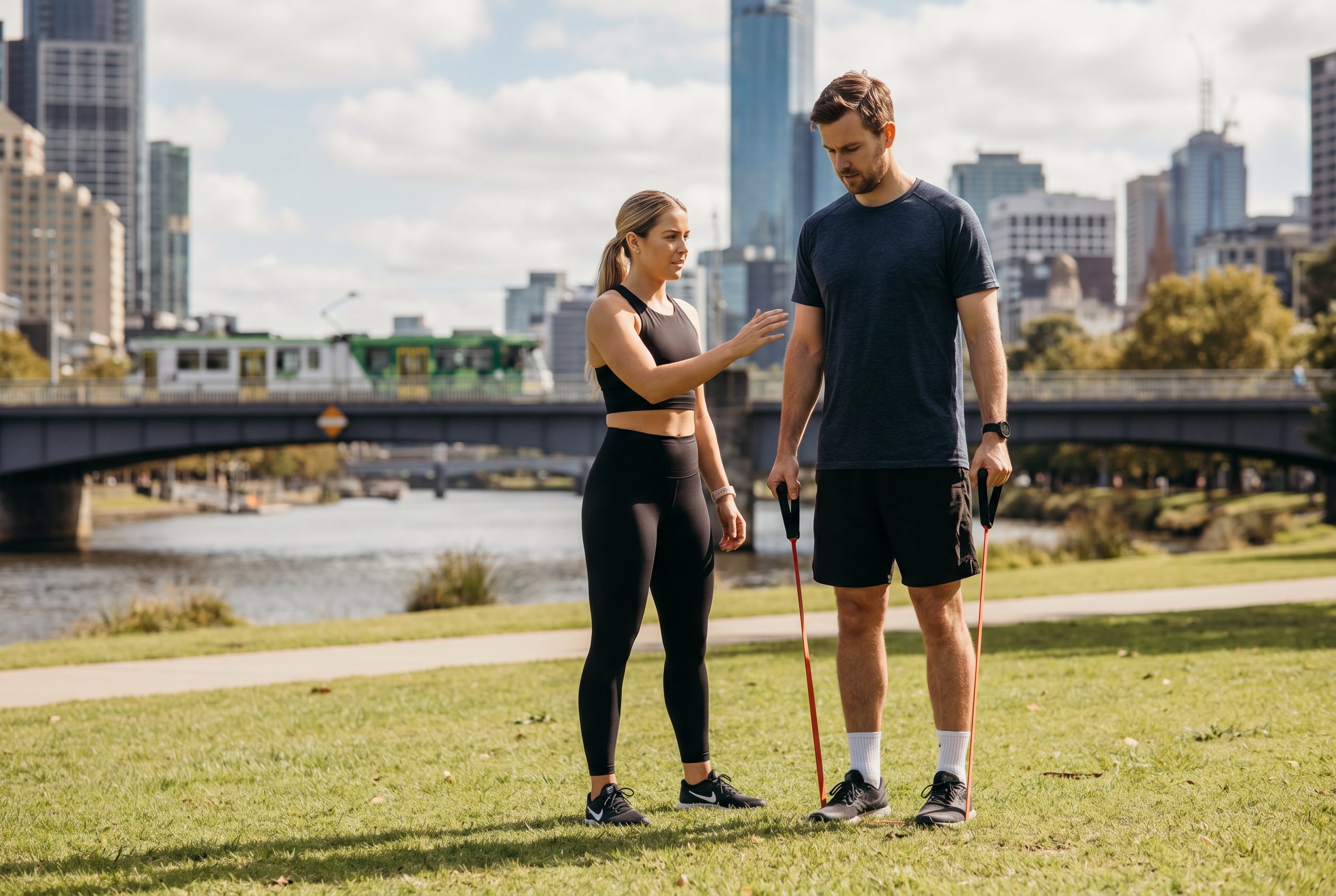
Session types: in-home, park and gym-based training
An ndis personal trainer melbourne service works best when the session happens somewhere you're comfortable moving: your lounge room, a local oval, a gym floor. We offer all three formats. Training fits around your support needs, transport and energy levels.
In-home and mobile sessions
A mobile session means your trainer brings the equipment to you: resistance bands, a mat, sometimes a kettlebell or two. This suits participants managing fatigue, sensory sensitivities or mobility aids, where getting to a gym adds stress before the activity even starts.
We've run full sessions in a hallway or a small unit courtyard, nothing but bodyweight and bands, and still seen genuine strength gains.
Park and gym-based workouts
A park workout might combine walking intervals with resistance bands for strength training. A gym-based session opens up machines and free weights, structured aerobic exercise or short high-intensity interval training blocks.
- Strength training using bands, dumbbells or gym machines
- Aerobic exercise for cardiovascular health and stamina
- Short, well-supervised high-intensity interval training for participants ready for it
We'll touch on basic nutrition where it's relevant to your goals, but specific dietary guidance stays with your dietitian or GP.
How we approach your training
Our approach starts with listening before we program anything. One of my clients came to us after two failed attempts at other gym programs. What worked was slowing right down for the first month and building confidence with seated, supported exercises.
Programs built around your goals and abilities
Every program is tailored to your current ability. We don't use templates. We set one clear goal first, walking to the letterbox unaided, say, or improving transfers, and structure each session to move toward it. A standard group class had been too fast-paced for that client to follow safely. One-to-one training let us slow the pace and adjust load week to week.
Tracking progress on your fitness journey
We track things that matter: reps completed, distance walked, how a transfer feels compared to a month earlier. Over about three months, one client went from needing support for every sit-to-stand to managing most independently. The mistake we see most often is doing too much too soon, which triggers fatigue and slows the whole fitness journey down.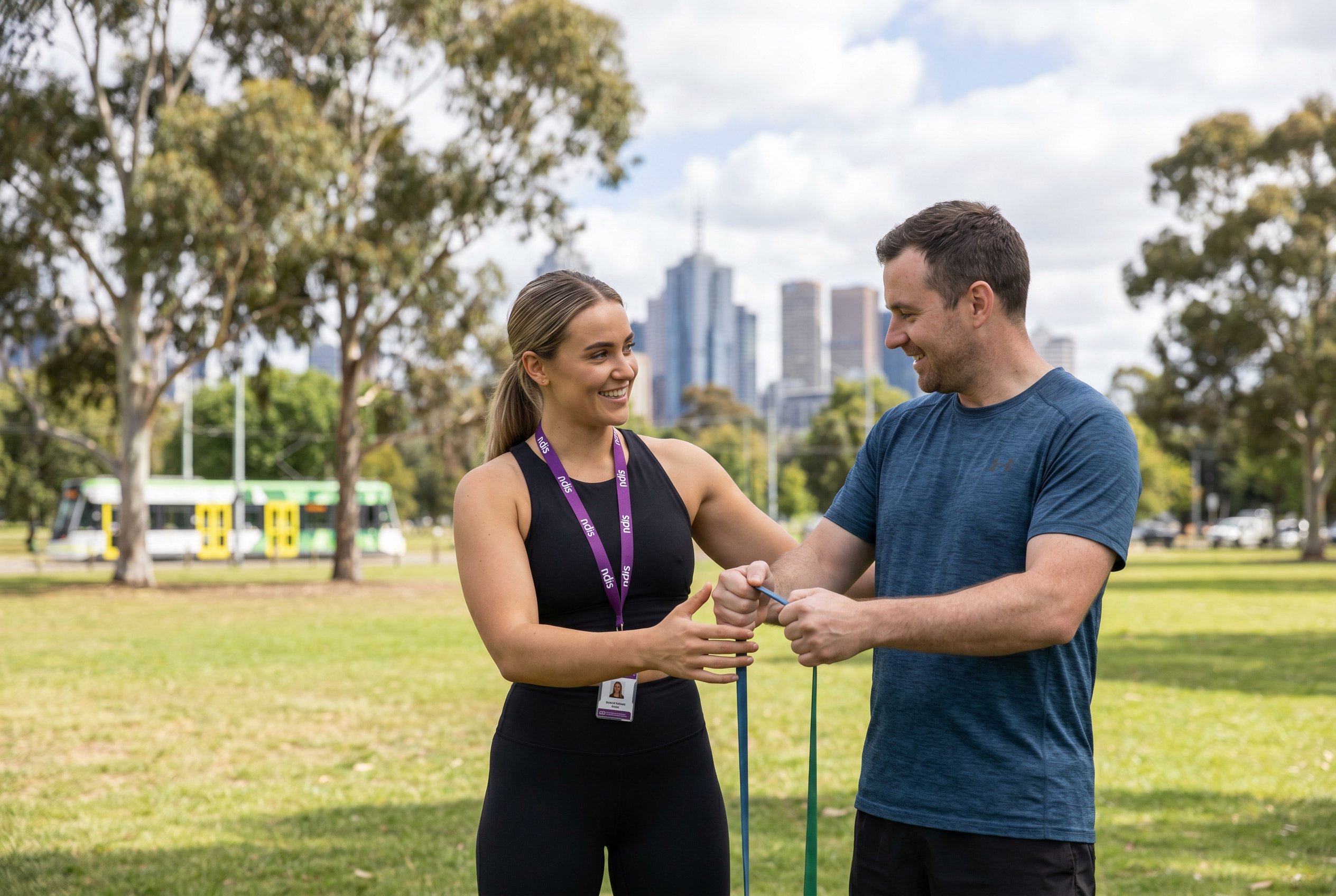
Exercise physiology and allied health expertise
Backed by exercise physiology
Every program starts with one question. What does this person's body need to do safely, and how do we build on it? That's exercise physiology at work. When training rests on sound physiology, the exercises match the participant's condition, energy levels and goals.
One of my clients with a spinal cord injury came to us after a gym had put him through a standard strength circuit. It left him sore and discouraged for a week. We rebuilt his program around his actual capacity and tracked load and recovery. Within two months he was completing seated cable work at a level that surprised his physio. That's why Exercise & Sports Science Australia accreditation matters when you're choosing who trains you.
Where personal training sits within allied health
NDIS personal training works alongside allied health supports such as physiotherapy, occupational therapy and speech pathology. A trainer who understands that network is a genuine professional asset to a participant's plan. When a participant's physio flags a hip precaution or an OT notes a fatigue pattern, that information should shape the next session.
- Liaison with allied health providers when a participant consents
- Session notes that track progress against NDIS goals
- Exercise selection that respects medical precautions and energy limits
Pricing, rates and your free consultation
Getting a clear answer on cost shouldn't be hard. Every new participant starts with a free consultation through the contact form. We talk through goals, funding and the practical side of scheduling before anyone commits to sessions.
What's included and how to get a quote
Session rates depend on location, session length and whether you're plan-managed or self-managed. We work out an accurate price once we understand what you need. Both plan-managed and self-managed participants are welcome, and sessions run in-home, at a local park or in a gym, whichever suits the participant best.
- Adapted one-to-one personal training for NDIS participants across Melbourne
- In-home, park and gym-based sessions available
- Plan-managed and self-managed participants welcome
- Free consultation before you commit to anything
Ready to see what a tailored program could look like? Book your free consultation through the contact form and we'll sort the details from there.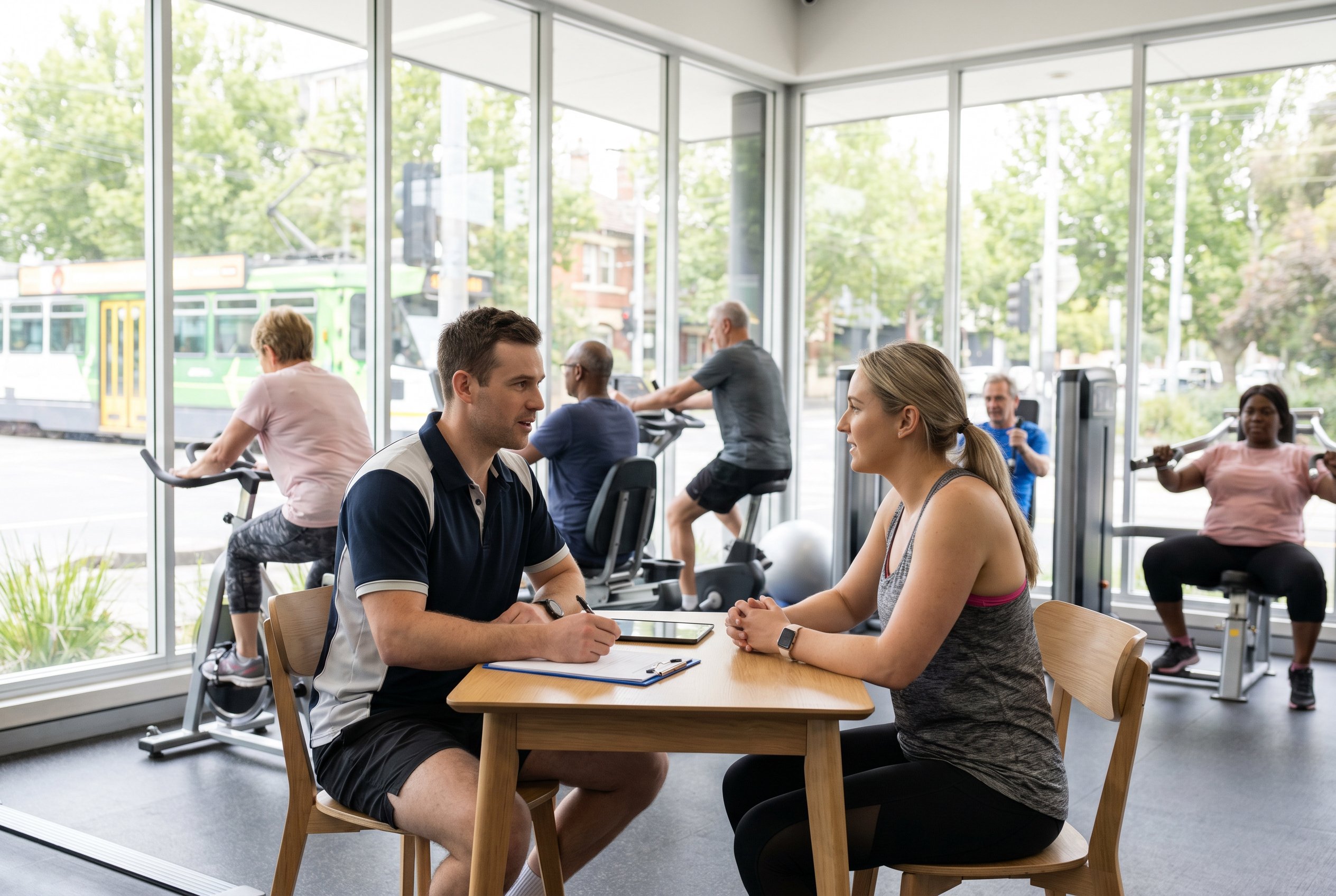
NDIS personal trainers near me: areas we cover across Melbourne
Searching for an ndis personal trainer melbourne based option that can actually get to you? Sessions run across the city, at your front door, in a local park, or at a gym you already feel comfortable in.
Suburbs we service
Coverage spans both sides of the city, including:
- Mordialloc, Mentone and Moorabbin
- Glen Iris, Armadale and Camberwell
- Springvale, Clayton and Dandenong
- St Kilda, Caulfield and Murrumbeena
- Mount Waverley, Burwood, Surrey Hills, Oakleigh and Nunawading
- Doncaster, Frankston and Upwey
Not on the list? Ask anyway. Suburbs get added as new participants come on board, so it's worth checking before you rule it out.
Book your free consultation
A free consultation is the easiest way to work out whether in-home, park or gym-based training suits you best. We'll talk through your goals and your NDIS plan (plan-managed or self-managed, both welcome), plus what a typical session could look like for you as a participant.
Get in touch through the contact form to arrange your free consultation and lock in your first session.
Frequently Asked Questions
Can NDIS pay for a personal trainer?
Yes, in many cases. Where training links directly to goals in your plan, such as building independence, strength or daily function, it's usually funded under Capacity Building or Core supports. That depends on whether you're self-managed, plan-managed or agency-managed.
Is $400 a month a lot for a personal trainer?
Not really, if that covers weekly one-to-one sessions with a trainer experienced in adapted, disability-specific programming. Compared with typical Melbourne rates for specialist coaching, $400 a month for four sessions is a fair price.
Will NDIS cover gym membership?
Generally, no. A standalone gym membership is treated as an everyday living cost, not a support. What can be funded is supervised, goal-linked training that happens to use gym equipment. Check the specifics with your plan manager or support coordinator before assuming coverage.
Is $300 a month a lot for a personal trainer?
It's a fairly typical amount for regular one-to-one sessions with a qualified trainer. Whether it's good value depends less on the number and more on the trainer's credentials and how closely each session is designed around your specific goals.
How do you become an NDIS personal trainer?
Most trainers start with a fitness or exercise physiology qualification, often aligned with Exercise & Sports Science Australia standards, then build knowledge of how NDIS supports work. From there, experience comes from coaching a range of participants and adapting programs to different conditions and goals.
Do you need an NDIS registered provider?
Only if you're agency-managed. Self-managed and plan-managed participants can choose an unregistered trainer, provided the service still fits within their plan's goals and budget. It's worth confirming your management type before booking, since it changes which providers you're able to use.
Key Insights
- When comparing price, cost, rates and reviews between trainers, weigh NDIS experience and recognised credentials as heavily as the dollar figure.